
For marketers, the challenge is not learning a new toolset. It is understanding a new operating system for advertising.
From Audience Targeting to Intent-Driven Discovery
For years, digital advertising relied on defined audiences. Marketers built segments, refined demographics, and optimised targeting criteria.That model is being replaced by intent-driven discovery.
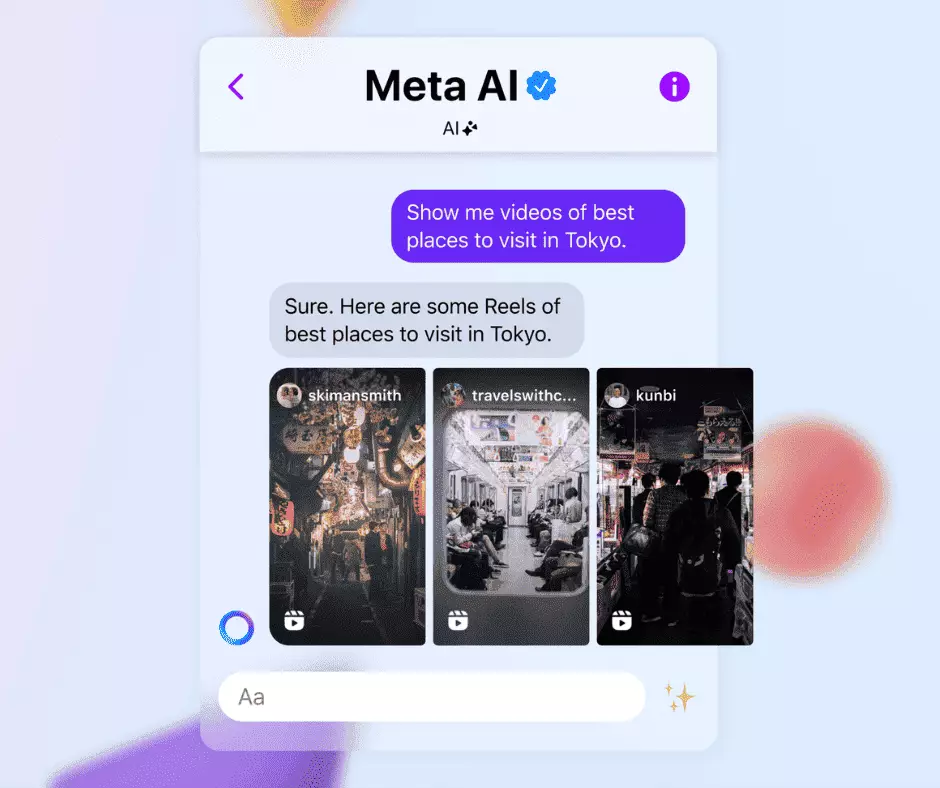
Platforms like Microsoft are introducing AI systems that expand query matching and personalise ad delivery across conversational environments such as Copilot and integrated search experiences. These systems interpret behaviour, context, and real-time signals to determine which ads are shown and when.
At the same time, the search itself is evolving. Advertising is beginning to integrate into AI-powered discovery experiences where users engage through natural language rather than keyword queries. This creates a more fluid environment where ads are delivered as part of the interaction rather than placed alongside it.
This changes how strategy is built. Campaign performance increasingly depends on the quality of signals, content, and intent alignment rather than predefined audience lists.
Creative Production Has Shifted from Craft to System
Generative AI has transformed how advertising creative is produced.Across the industry, platforms such as Meta and Amazon are developing tools that allow marketers to generate images, copy, and video assets at scale, often from minimal inputs like product data or structured prompts.
This has removed a long-standing constraint in marketing operations. Creative production is no longer limited by time or resources. Teams can generate multiple variations, test continuously, and refine outputs in near real time.
However, this introduces a different problem.
When production becomes effortless, differentiation becomes difficult. Audiences are exposed to a growing volume of technically polished content that often lacks depth, context, or emotional relevance.
Creative advantage is shifting away from execution and towards interpretation. The ability to understand audience context, cultural timing, and message clarity is becoming more valuable than the ability to produce assets.
Automation Is Expanding into Full Campaign Management
Artificial intelligence is moving deeper into campaign execution.There is a clear direction across major platforms towards end-to-end automation. Systems are being designed to generate creative, allocate budgets, test variations, and optimise performance with minimal manual input.
This creates efficiency, but it also shifts responsibility.
Marketers are moving away from hands-on execution and towards strategic oversight. The role becomes one of defining objectives, validating outputs, and ensuring alignment with business goals rather than controlling each campaign element.
Measurement Is Becoming More Advanced and Less Transparent
Artificial intelligence is also redefining how performance is measured.AI-driven systems can analyse large datasets, predict performance outcomes, and optimise campaigns continuously. This includes automated bidding, real-time adjustments, and deeper attribution modelling.
These capabilities provide greater precision. Campaigns can be adjusted dynamically based on performance signals that would be difficult for human teams to process manually.
At the same time, visibility into decision-making is becoming more limited. Many optimisations occur within models that are not fully transparent.
This creates a new requirement for marketers. Data interpretation skills are becoming essential. Understanding how to question results, identify anomalies, and connect insights to business outcomes is critical in an AI-driven environment.
Trust, Safety, and Governance Are Now Strategic Priorities
As AI expands its capabilities, it also introduces new risks.The rise of AI-generated content has been accompanied by an increase in deceptive advertising, including deepfake endorsements and manipulated media appearing in paid campaigns.
In response, platforms like Google are strengthening AI-driven safety systems to detect and prevent harmful ads before they are shown. Tools within advertising platforms are being enhanced to flag risks, improve compliance, and guide advertisers towards safer practices.
The scale of the challenge continues to grow as content generation becomes more accessible.
Trust is becoming a defining factor in advertising effectiveness. Campaigns that lack authenticity or raise concerns around credibility risk being ignored or rejected by audiences.
The Attention Economy Is Reaching Saturation
The expanding use of AI in advertising has a significant, yet often overlooked, consequence: its impact on audience attention.AI dramatically increases the speed and volume of content production, leading to an oversaturation of advertising across all platforms. Although this democratisation benefits advertisers, it ultimately results in audience fatigue.
Consumers are now bombarded by an endless flow of content that frequently feels generic, repetitive, or out of sync with their genuine needs. This constant exposure diminishes engagement and accelerates the decline of attention spans.
In this hyper-competitive landscape, success is no longer about the capacity to generate content, but the ability to capture and sustain attention. Relevance, precision in timing, and clarity of message are the new determinants of effectiveness.
The Role of the Marketer Is Being Redefined
The evolving landscape of marketing has fundamentally reshaped the marketer's role.Automation now handles much of the execution, encompassing production, targeting, optimisation, and various elements of operational decision-making.
The core function that remains is strategic direction.
Marketers are now primarily tasked with defining strategy and objectives, interpreting complex insights, and guaranteeing that campaigns accurately convey the brand's voice and values. While artificial intelligence is a powerful tool to assist in these areas, it cannot assume ownership of them.
This shift aligns with broader industry requirements, as organisations increasingly prioritise strategic acumen, proficiency in AI, and the capacity to collaborate effectively with automated systems.
Building a Marketing Strategy That Works Within AI Systems
To operate effectively in this environment, marketing strategies need to adapt in practical ways.- Clarity of Inputs: AI systems rely on strong data, signals, and structured information, as weak inputs lead to weak outputs.
- Intentional Creative Direction: High-volume production should be guided by clear messaging and strong audience understanding.
- Governance and Oversight: This includes reviewing outputs, maintaining brand standards, and ensuring compliance with platform policies.
- Continuous Testing and Learning: AI systems improve through iteration, and campaigns should be structured to learn and adapt over time.
- Customer Focus: Technology can support delivery, but relevance and clarity determine whether a message resonates.
Supporting Strategy, Execution, and Clarity in an AI-Driven Landscape
Artificial intelligence is reshaping how advertising works, but it does not replace the need for structured thinking and consistent execution.Marketing Assistants support businesses in navigating this shift by aligning strategy, systems, and content with evolving platform capabilities. From campaign planning to content development and performance tracking, the focus remains on clarity, consistency, and measurable outcomes.
As advertising becomes more automated, the value of a well-defined strategy becomes more important. The right structure ensures that artificial intelligence works effectively within your business, rather than operating without direction. Contact us now to learn more!