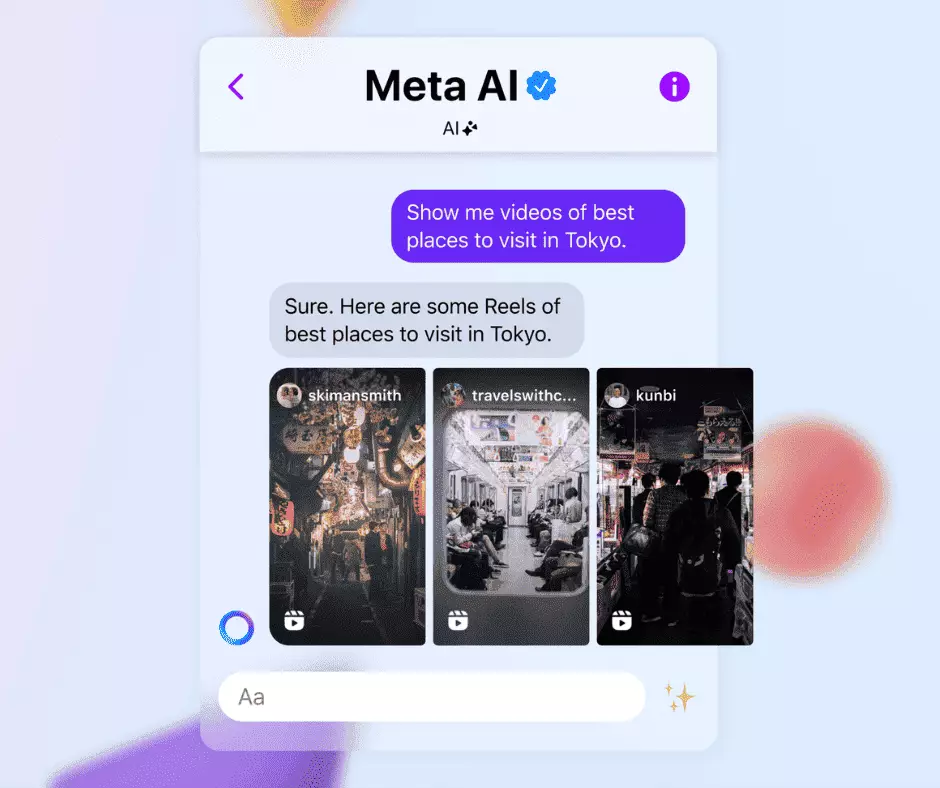
Artificial intelligence is now reshaping that system at extraordinary speed. People increasingly ask AI tools direct questions in natural language instead of manually searching through websites. Platforms like ChatGPT, Google Gemini, Perplexity AI, and Google AI Overviews summarise information instantly, often before users click a single webpage.
This shift has created widespread confusion across marketing teams. New acronyms now flood the industry almost weekly: GEO, AEO, AIO, AXO, AI SE, LLM optimisation.
For many businesses, the terminology feels overwhelming. The deeper reality is much simpler. Search has evolved from a ranking system into a recommendation system, and recommendation systems behave very differently from traditional search engines.
The Internet Is Entering an Era of Machine-Mediated Discovery
Traditional search engines mainly acted as navigators. AI search systems behave more like interpreters. Instead of presenting a list of websites and asking users to investigate independently, generative AI platforms synthesise information from multiple sources and produce conversational responses that feel immediate and authoritative.This changes how people make decisions online. Someone researching accounting software may ask an AI assistant to compare platforms for freelancers. A parent searching for safe skincare products for children may continue asking follow-up questions conversationally instead of opening dozens of articles. A business owner exploring cybersecurity providers may receive a generated shortlist before ever visiting a company website.
In many situations, the AI interface becomes the first layer of judgment. Visibility increasingly depends on whether AI systems consider a business credible enough to mention, summarise, recommend, or cite.
Why SEO Still Matters
A growing number of headlines claim that SEO is dying. The industry has heard this prediction many times before through the rise of social media, mobile search, voice assistants, and TikTok discovery. Yet search remained deeply important because people still needed information.Traditional SEO still provides the foundational infrastructure that AI systems rely on. AI platforms continue pulling information from websites, articles, reviews, databases, forums, and structured content. If a website lacks clarity, authority, technical structure, or topical depth, AI systems struggle to interpret it accurately.
Technical optimisation still matters. Internal linking still matters. Structured content still matters. Trust signals still matter. The difference is that ranking highly in search results no longer guarantees attention in the same way it once did.
Today, a business may appear prominently in Google while remaining absent from AI-generated answers entirely. That gap explains why new optimisation disciplines have emerged.
Understanding the Difference Between SEO, AEO, and GEO
The marketing industry currently uses several overlapping terms to describe optimisation strategies for AI-driven discovery. While the terminology continues evolving, the concepts themselves are fairly straightforward.
SEO Focuses on Search Rankings
Search Engine Optimisation helps websites appear prominently within traditional search engine results. SEO includes technical optimisation, keyword strategy, metadata, site structure, backlinks, page speed, and user experience. Its primary goal involves improving discoverability within search engine result pages.
AEO Focuses on Direct Answers
Answer Engine Optimisation focuses on helping content appear inside direct answers generated by search systems. This includes AI Overviews, voice assistants, conversational assistants, and featured snippets.AEO prioritises content that answers questions clearly and structurally. AI systems prefer information that can be extracted and summarised confidently. This explains why concise explanations, FAQ sections, and clearly organised educational content perform strongly in AI-assisted environments.
GEO Focuses on AI-Generated Visibility
Generative Engine Optimisation focuses on visibility inside generative AI systems such as ChatGPT, Gemini, Claude, and Perplexity. Unlike traditional SEO, GEO operates within systems that synthesise information from multiple sources simultaneously.AI platforms evaluate broader reputation signals across the internet rather than relying solely on website rankings. Brands increasingly need digital authority that extends outside their own websites.
Why Brand Reputation Has Become Central to AI Visibility
One of the most significant developments in AI search involves the growing importance of distributed trust signals. AI systems evaluate brands across multiple environments, including editorial media coverage, Reddit discussions, product reviews, podcasts, expert interviews, forums, and educational resources.This changes how digital authority works. Traditional SEO heavily rewarded backlinks and technical optimisation. AI visibility still values those elements, though broader reputation patterns increasingly influence discoverability as well.
A company discussed positively across respected sources develops stronger contextual authority than a company publishing isolated content entirely about itself. This is one reason public relations, thought leadership, podcasts, expert commentary, and editorial publishing have regained enormous strategic importance.
AI systems appear to value corroboration. The more credible sources discussing a business consistently, the easier it becomes for AI systems to interpret that brand as trustworthy.
Why Generic AI Content Is Becoming Easier to Ignore
The rise of generative AI tools triggered an explosion of low-quality publishing across the internet. Thousands of businesses began producing repetitive articles designed primarily to satisfy algorithms rather than genuinely help readers.Ironically, AI search may now punish this behaviour over time. Generative systems increasingly prioritise originality, expertise, usefulness, clarity, and credibility because they need trustworthy information to generate reliable answers.
This creates an interesting reversal inside digital marketing. Human insight is becoming strategically valuable again. Businesses producing original research, transparent case studies, expert analysis, proprietary frameworks, and deeply useful educational content are positioning themselves more effectively for long-term AI visibility.
The internet may become flooded with synthetic content, though thoughtful expertise still creates differentiation.
Why Machine-Readable Trust Is Becoming a Marketing Priority
A phrase increasingly appearing across AI visibility discussions is machine-readable trust. That concept refers to how AI systems evaluate credibility through observable digital patterns.Humans naturally assess trust through tone, emotion, experience, and social cues. AI systems rely on structured signals instead. These signals may include consistent brand mentions, citation frequency, content clarity, author expertise, review sentiment, topical depth, and cross-platform consistency.
Brands that communicate inconsistently across platforms create ambiguity for AI systems. Brands with clear expertise and credible digital footprints become easier for AI systems to understand and recommend.
This represents a major strategic evolution for marketing teams. Visibility increasingly depends on how well a business communicates authority across the broader digital ecosystem rather than through isolated webpages alone.
The Rise of Zero-Click Discovery
One of the biggest concerns surrounding AI search involves the rise of zero-click behaviour. Users increasingly receive answers directly inside AI interfaces without visiting websites afterwards.This creates a fascinating tension for businesses. Traffic metrics alone may become less reliable indicators of influence. A brand mentioned positively inside an AI-generated recommendation may shape purchasing decisions even when users never click through to the website itself.
Visibility strategy may gradually shift away from pure click acquisition and toward broader brand inclusion inside AI-mediated decision making. Companies that establish authority early may gain disproportionate advantages as these systems continue evolving.
Why Search Is Becoming Increasingly Conversational
Perhaps the most important shift is psychological rather than technical. People are becoming accustomed to interacting with information conversationally.Instead of searching fragmented keywords such as “best CRM startup affordable,” users increasingly ask complete questions such as “What CRM works best for a growing creative agency with remote staff and limited onboarding time?”
That behavioural shift matters deeply because conversational search rewards contextual understanding rather than isolated keyword matching. Businesses, therefore, need content that reflects real human questions, concerns, comparisons, and decision-making processes.
The strongest content today often sounds educational, structured, conversational, and genuinely helpful. Interestingly, those same qualities also improve readability for human audiences.
The Future of Search Will Reward Clarity and Credibility
The AI visibility landscape still feels noisy because the technology continues evolving rapidly. New acronyms will continue appearing, and new optimisation tools will continue emerging. Some strategies will prove valuable while others fade quickly.The underlying direction, however, is becoming increasingly clear. Search is moving toward systems that evaluate trust, usefulness, expertise, and contextual authority at scale.
Businesses that invest in thoughtful communication, credible publishing, strong digital reputation, and genuinely useful educational content are positioning themselves effectively for the next era of discovery. The future likely belongs to brands that communicate clearly enough for both humans and intelligent systems to understand them confidently.
Marketing Assistants Help Businesses Stay Visible in an AI-Driven Search Environment
Marketing Assistants help businesses strengthen digital visibility through strategic content development, SEO support, AI-ready communication, brand positioning, and long-term marketing systems.As AI-driven search continues to reshape how customers discover information online, businesses need strategies that support credibility, discoverability, clarity, and trust across multiple digital channels. Marketing Assistants develop content and visibility strategies that help brands communicate effectively in a search landscape increasingly shaped by intelligent systems and conversational discovery. Contact us now to learn more!